Popis
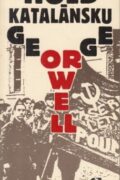
E-kniha George Orwell: Homage to Catalonia
Anotace
O autorovi
 George Orwell
[25.6.1903-21.1.1950] George Orwell, vlastním jménem Eric Arthur Blair, se narodil v Motihari v Indii v rodině koloniálního úředníka, v typické anglické „middle-class“. Vyrůstal v Anglii v Oxfordshiru, kde plyne také říčka Orwell, podle níž si Blair zvolil svůj pseudonym. Vystudoval soukromou střední školu (proti nim posléze velice brojil) a prestižní Eton. Poté do svých 25 let sloužil v Indické imperiální...
George Orwell: životopis, dílo, citáty
Chapter 11
IT will never be possible to get a completely accurate and unbiased account of the Barcelona fighting, because the necessary records do not exist. Future historians will have nothing to go upon except a mass of accusations and party propaganda. I myself have little data beyond what I saw with my own eyes and what I have learned from other eyewitnesses whom I believe to be reliable. I can, however, contradict some of the more flagrant lies and help to get the affair into some kind of perspective.
First of all, what actually happened?
For some time past there had been tension throughout Catalonia. In earlier chapters of this book I have given some account of the struggle between Communists and Anarchists. By May 1937 things had reached a point at which some kind of violent outbreak could be regarded as inevitable. The immediate cause of friction was the Government’s order to surrender all private weapons, coinciding with the decision to build up a heavily-armed ‘non-political’ police-force from which trade union members were to be excluded. The meaning of this was obvious to everyone; and it was also obvious that the next move would be the taking over of some of the key industries controlled by the C.N.T. In addition there was a certain amount of resentment among the working classes because of the growing contrast of wealth and poverty and a general vague feeling that the revolution had been sabotaged. Many people were agreeably surprised when there was no rioting on i May. On 3 May the Government decided to take over the Telephone Exchange, which had been operated since the beginning of the war mainly by C.N.T. workers; it was alleged that it was badly run and that official calls were being tapped. Salas, the Chief of Police (who may or may not have been exceeding his orders), sent three lorry-loads of armed Civil Guards to seize the building, while the streets outside were cleared by armed police in civilian clothes. At about the same time bands of Civil Guards seized various other buildings in strategic spots. Whatever the real intention may have been, there was a widespread belief that this was the signal for a general attack on the C.N.T. by the Civil Guards and the P.S.U.C. (Communists and Socialists). The word flew round the town that the workers’ buildings were being attacked, armed Anarchists appeared on the streets, work ceased, and fighting broke out immediately. That night and the next morning barricades were built all over the town, and there was no break in the fighting until the morning of 6 May. The fighting was, however, mainly defensive on both sides. Buildings were besieged, but, so far as I know, none were stormed, and there was no use of artillery. Roughly speaking, the C.N.T.–F.A.I.–P.O.U.M. forces held the working-class suburbs, and the armed police-forces and the P.S.U.C. held the central and official portion of the town. On 6 May there was an armistice, but fighting soon broke out again, probably becau…











Recenze
Zatím zde nejsou žádné recenze.